1 in 31 U.S. children has autism, but the average diagnosis comes at age 4. Learn when ABA therapy can start for toddlers (as early as 18 months), what sessions look like, and how to begin.

If your child was recently diagnosed with autism, or if your pediatrician raised concerns at a well-child visit, you've probably heard the phrase "early intervention" more than once. ABA therapy is one of the most studied approaches for young children with autism, and it can begin as early as 18 months.
In April 2025, the CDC reported that 1 in 31 U.S. children aged 8 has autism, and 1 in 34 among 4-year-olds (CDC ADDM Network, 2025). Yet the median age of a first autism diagnosis is still 47 months, nearly 4 years old. Most families lose months of the window when early support matters most simply because no one flagged the signs sooner.
This guide is for parents of toddlers aged 18 months to 3 years. You'll learn what ABA therapy actually looks like for a toddler, what early signs to watch for, how many hours per week is realistic, and how to take the first step.
If your child was just diagnosed, our post-diagnosis guide walks through what to do first.
Key Takeaways
ABA therapy can begin as early as 18 months. But the average U.S. child isn't diagnosed until nearly age 4 (CDC, 2025). Getting an evaluation early matters.
Toddler ABA sessions are play-based. A trained therapist follows your child's lead and works on communication, play, and daily routines.
Parent involvement is a core part of the therapy. Studies show parent-led practice at home significantly strengthens what children learn in sessions.
How many hours per week your child needs depends on their individual assessment, not a one-size-fits-all number.
What Is ABA Therapy for Toddlers?
ABA therapy (Applied Behavior Analysis) is a structured, evidence-based approach that helps children learn new skills and reduce behaviors that get in the way of daily life. For toddlers, it looks a lot like guided play.
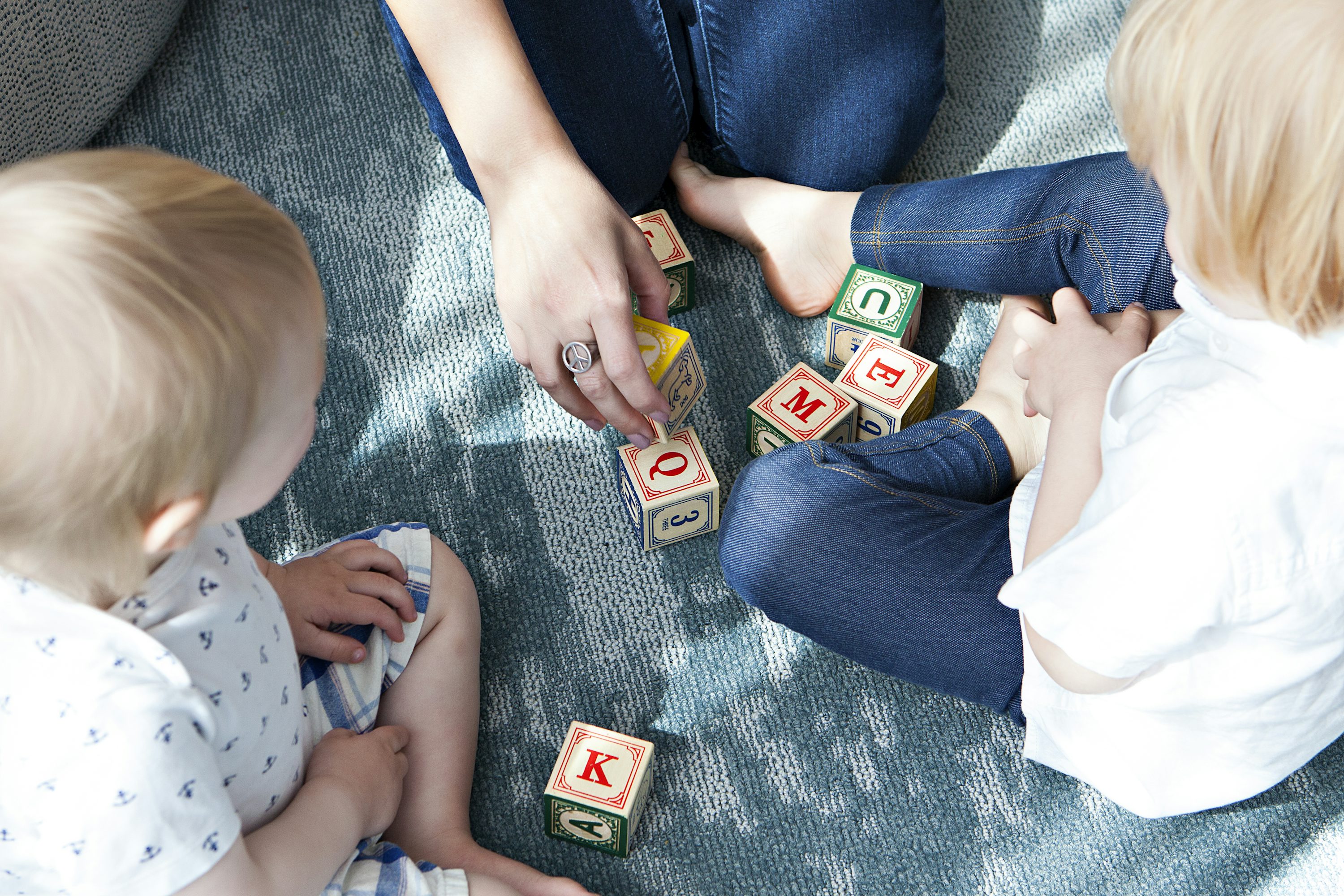
A trained therapist sits on the floor with your child, follows their interests, and uses everyday moments, like a favorite toy, a book, or a snack, to teach skills like pointing, asking for things, and playing alongside others. There's no desk, no worksheet, and no drill-and-repeat repetition.
The core idea is straightforward. When a child does something we want to encourage, like making eye contact, reaching for a toy, or using a word, the therapist responds in a way that makes that moment more likely to happen again. Over time, these small moments of learning add up.
ABA for toddlers is not the same as approaches you might have read about from older research. Most toddler ABA today is naturalistic: it happens in the places your child already spends time, and it's built around what your child already loves.
For a full explanation of how ABA works, see our overview of ABA therapy.
Why the 18-Month to 3-Year Window Matters
Starting ABA therapy between 18 months and 3 years doesn't guarantee a specific outcome. But the research consistently shows that earlier is better for most children.
In April 2025, the CDC reported that the median age of a first autism diagnosis in the U.S. is 47 months, almost 4 years old (CDC ADDM Network, 2025). That's more than two years after autism can first be reliably identified. Meanwhile, the American Academy of Pediatrics recommends autism-specific screening at 18 and 24 months and has stated that early support for autism symptoms is critical, even before a formal diagnosis (AAP Clinical Report, 2020).
A 2024 study out of Drexel University found that pediatric practices using standardized autism screening tools identified children for referral at an average of 20.6 months, three full months earlier than practices that relied on clinical judgment alone. Standardized screening also referred nearly five times more children (JAACAP, 2024).
The identification gap: Autism can be reliably identified as early as 18 months. The U.S. median diagnosis age is 47 months. That's a nearly 2.5-year window where many children are waiting without support.
What this means practically: if something feels off and your gut is telling you to ask, trust it. Ask your pediatrician for an autism-specific screening at your next well-child visit. You don't need a diagnosis to start the evaluation process.
California families can also explore Early Start, the state's public early intervention program, which works alongside private ABA therapy for many families.
Early Signs to Watch For
You don't need to wait for a diagnosis to raise a concern. The American Academy of Pediatrics recommends asking for an autism evaluation if your child shows any of the following:
At 12 months:
Doesn't point at things to show interest (like an airplane overhead)
Doesn't wave goodbye
Doesn't respond to their name
At 18 months:
Doesn't have at least one word spoken clearly
Doesn't make eye contact consistently
Doesn't imitate simple actions like waving or clapping
At 24 months:
Doesn't use two-word phrases on their own
Has lost language or social skills they previously had
Any loss of language or social skills at any age is a reason to call your pediatrician that week. Don't wait for the next scheduled visit.
These aren't meant to help you diagnose your child yourself. They're signs that your child should be evaluated. An evaluation isn't a verdict. It's information that helps you act.
Learn about the ADOS-2, the gold-standard autism diagnostic evaluation Intercare offers.
If you're still noticing early signs and haven't pursued an evaluation yet, our guide to signs of autism in toddlers can help you know what to look for.
What a Toddler Session Actually Looks Like
For a 2-year-old, an ABA session might look like this:
Blowing bubbles together, with the therapist pausing and waiting for your child to point or say "more"
Sorting colored blocks while the therapist names each color and waits for your child to imitate
Rolling a ball back and forth builds the simple turn-taking of conversation
Practicing transitions: from one activity to the next, so your child builds comfort with change
Sessions for toddlers typically run 2–3 hours. The therapist working directly with your child is usually a Registered Behavior Technician (RBT). A Board Certified Behavior Analyst (BCBA) designs the therapy plan, supervises sessions, reviews progress regularly, and adjusts goals as your child grows.

Sessions can be at a center, in your home, or a combination of both. Center-based therapy provides a structured environment with fewer distractions and opportunities to build skills around other children. In-home therapy lets your child practice in the real environments where those skills need to happen most.
How Many Hours Per Week?
This is one of the most common questions, and one of the most honestly complicated to answer.
You'll often hear that ABA for young children requires 20 to 40 hours per week. Some research does support more intensive approaches. A 2026 analysis of 621 children in early intensive ABA found that children in higher-intensity groups (26–40 hours per week) made greater gains in thinking skills, daily living skills, and autism symptoms compared to lower-intensity groups (Eldevik et al., Autism Research, 2026).
But the picture is more complex than a single number. A 2024 meta-analysis in JAMA Pediatrics, the largest review of its kind, examining outcomes for 9,038 children across 144 studies, found no statistically significant link between weekly therapy hours and the size of a child's improvement (JAMA Pediatrics, 2024). The authors concluded that outcomes were shaped by many factors beyond hours alone.
What the research says about hours: Some studies link higher intensity (26–40 hrs/week) to better outcomes. Others, including a 2024 JAMA Pediatrics review of 9,038 children, found no significant dose-response. The honest answer: hours matter, but they're one piece of a larger picture. Your child's BCBA will recommend a schedule based on their specific assessment.
Don't let the 20–40 hour range discourage you from starting. Many toddlers begin with a lighter schedule that grows over time.
What Skills Does ABA Focus On for Toddlers?
ABA goals for toddlers are built around what a child at this age needs to function and connect with the world around them. Every child's goals are different, but most toddler ABA plans address some combination of:
Communication. This is usually the top priority. Goals might include making eye contact to get something, pointing to show interest, using words or gestures to ask for things, and responding when someone calls their name.
Play skills. Play is how toddlers learn. ABA teaches children to use toys in different ways, play next to other children, and eventually play with other children in simple back-and-forth exchanges.
Daily routines. Eating at the table, tolerating teeth brushing, getting dressed, moving from one activity to the next: these might sound small, but they make an enormous difference in day-to-day family life.
Reducing behaviors that get in the way. When a child is frustrated and can't yet communicate that, they often express it through behavior. ABA doesn't just address the behavior. It identifies what the child is trying to express and teaches a better way to get there.
Your Role as a Parent
Parent involvement in ABA isn't optional. It's one of the strongest drivers of progress.
A 2023 meta-analysis of 54 studies and nearly 3,000 children found that parent-implemented ABA strategies produced consistent, meaningful improvements across communication, social skills, and daily behaviors, with a weighted average effect size of 0.55 (PMC, 2023). In plain terms: when parents use the same strategies at home that their child's BCBA uses in sessions, children make more progress than when therapy happens only in appointments.
What parent involvement looks like varies by program, but most include:
Parent training sessions: your child's BCBA teaches you the specific strategies your child is working on so you can use them at home. These are often monthly, or more frequent at the start.
Practice in everyday moments: not running formal sessions at home, but using what you've learned when your child asks for a snack, reaches for a toy, or is starting to get frustrated.
Progress updates: sharing what you're seeing at home so the BCBA can adjust goals as your child develops.
A 2024 study on family-centered ABA found that families closely integrated into their child's therapy used their strategies 92% of the time, far higher than the 15–37% reported in comparable studies where families were less involved (PMC, 2024). That consistency between sessions is what moves the needle.

What About Concerns Around ABA for Young Children?
Some parents come across criticism of ABA online, including concerns about masking natural behaviors like stimming, or worries that very young children can't meaningfully consent to structured therapy. These are worth taking seriously rather than dismissing.
Modern ABA has moved away from some of its earliest, more rigid practices. Today's approach for toddlers, including at Intercare, is play-based and follows the child's interests rather than suppressing natural behaviors like stimming unless a behavior is unsafe or significantly interferes with learning. Ask any provider directly how they think about stimming and self-regulation. A thoughtful answer is a good sign.
It's also fair to ask about your child's comfort and engagement during sessions. A toddler who seems consistently distressed rather than engaged is a signal worth raising with your BCBA, not something to push through.
Intercare Early: ABA for Children Ages 0–6
Intercare Early is Intercare Therapy's program designed specifically for young children from infancy through age 6. It focuses on the foundational skills that children need most during this window: communication, play, daily living, and early social connection.
Sessions in Intercare Early are play-based and naturalistic. The therapy team works closely with families throughout, so the skills children are building in their sessions carry into everyday life at home. Intercare Early is available at centers across California, as well as through in-home services.
If you're wondering whether Intercare Early is the right fit for your child, the first step is a clinical assessment with one of our BCBAs. There's no obligation. It's a conversation about where your child is and what support could look like.
Meet the BCBAs who lead Intercare's clinical team.
Insurance and Getting Started
Most commercial insurance plans cover ABA therapy for children with an autism diagnosis. Intercare is in-network with:
Anthem Blue Cross
Blue Shield of California
Beacon Health Options
Catalight
Molina Healthcare
Optum
Uprise Health
Magellan Health
Your first step is a clinical intake: a conversation with our team about your child's current development, what you've been observing, and what your family needs. From there, a BCBA will complete a formal assessment and build an individualized plan.
If you're not sure whether your child is ready for an evaluation, start by asking your pediatrician for an autism-specific screening at your next well-child visit. If concerns are identified, ask for a referral for a diagnostic evaluation.
Intercare offers ADOS-2 diagnostic evaluations, the gold-standard assessment for autism.
Find an Intercare center near you.
Ready to take the next step? Contact Intercare's team to schedule an intake conversation or ask questions about your child. Our BCBAs work with toddlers and their families every day, and we're happy to help you figure out where to begin.
Frequently Asked Questions
Can ABA therapy start before an autism diagnosis?
Yes. You don't need a formal diagnosis to begin the evaluation process. The American Academy of Pediatrics recommends starting support for autism symptoms as early as possible, even before a diagnosis is confirmed. If your child has clear developmental delays, many families start the intake process while waiting for a diagnostic evaluation.
What age can a child start ABA therapy?
ABA therapy can begin as early as 18 months. Autism can be reliably identified by 18–24 months, which is why the AAP recommends autism-specific screening at both of those well-child visits. Starting therapy before age 3 keeps children in the window when early learning tends to have the greatest impact.
Does ABA therapy work for 2-year-olds?
Yes. ABA for toddlers and 2-year-olds is well-documented. A 2026 analysis of early intensive ABA across 15 studies and more than 600 children found consistent, clinically meaningful improvements in daily living skills, thinking skills, and autism symptom severity (Eldevik et al., Autism Research, 2026). Sessions for 2-year-olds are play-based and naturalistic, not desk-based.
Is 40 hours a week of ABA too much for a toddler?
Some families and independent researchers have raised this concern, and it's a fair question to ask. There's no universal answer. The right number of hours depends on your specific child's needs, and a good BCBA will adjust the schedule based on how your toddler is actually responding, not apply a fixed number to every child. If your child seems overwhelmed or exhausted rather than engaged, that's worth raising with your care team right away.
What's the difference between ABA and early intervention?
"Early intervention" refers to any support services for children under age 3 with developmental delays, including speech therapy, occupational therapy, physical therapy, and ABA. ABA is one type of early intervention and is the most studied specifically for children with autism. Many children receive ABA alongside speech therapy or OT.
Does my child need to be talking to start ABA?
No. ABA is especially valuable for children who aren't yet speaking or who use very few words. Teaching early communication (pointing, gesturing, requesting with pictures, building first words) is often the first goal for toddlers who aren't verbal yet. You don't need to wait for speech to start.
How do I know if my toddler needs ABA therapy?
If your child has an autism diagnosis, ABA is typically a primary recommendation. If your child hasn't been diagnosed but you've noticed delays in communication, play, or social connection, the first step is talking to your pediatrician and asking for a screening. An evaluation isn't a commitment. It's information.
Learn about the ADOS-2 evaluation Intercare offers.
Conclusion
The most important thing to know about ABA therapy for toddlers: you don't have to wait. If your child has been diagnosed with autism, or if your pediatrician raised concerns, starting the evaluation process now puts your family in the best position to act during the years when support matters most.
Most children in the U.S. aren't diagnosed until nearly age 4. The families who get started earlier aren't the ones who had all the answers. They're the ones who asked.
Continue learning:
Sources
Centers for Disease Control and Prevention. Prevalence and Characteristics of Autism Spectrum Disorder Among Children Aged 8 Years — ADDM Network, 2022. MMWR, April 2025. https://www.cdc.gov/mmwr/volumes/74/ss/ss7402a1.htm
American Academy of Pediatrics. Identification, Evaluation, and Management of Children with Autism Spectrum Disorder. Pediatrics, 2020. https://pubmed.ncbi.nlm.nih.gov/31843864/
Drexel University / JAACAP. Standardized Autism Screening During Pediatric Visits. November 2024. https://drexel.edu/news/archive/2024/November/Standardized-Autism-Screening-Pediatric-Visits-Identified-More-Children-with-Autism
Eldevik S et al. Clinically Significant Outcomes of Early Intensive Behavioral Intervention. Autism Research, January 2026. https://pubmed.ncbi.nlm.nih.gov/41502379/
Nevill RE et al. Meta-analysis of parent-implemented interventions for toddlers and preschoolers with autism. PMC, 2023. https://pmc.ncbi.nlm.nih.gov/articles/PMC10539413/
Weiss MJ et al. Family-Centric ABA Treatment Utilization and Outcomes. PMC, 2024. https://pmc.ncbi.nlm.nih.gov/articles/PMC11051390/
JAMA Pediatrics. Intervention Amount and ABA Outcomes — Meta-analysis, 144 studies, 9,038 children. 2024. https://jamanetwork.com/journals/jamapediatrics/fullarticle/2819784
M.S., BCBA
